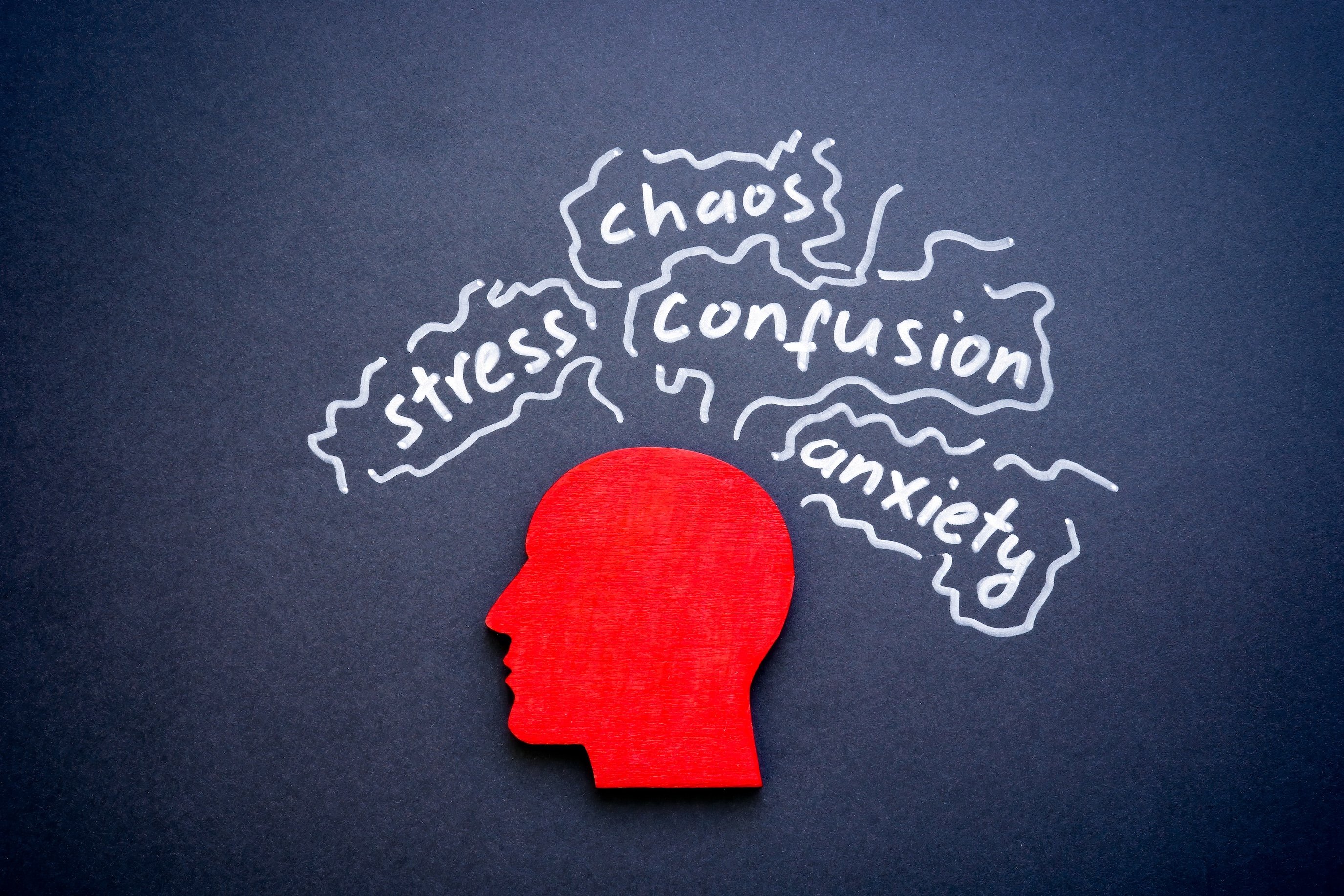
Grief is hard for anyone. But when you're already managing depression, anxiety, PTSD, bipolar disorder, or a substance use disorder, it hits differently — and not in the way people around you might expect.
It's not just deeper sadness. It goes after the very things keeping you afloat: the medication routine, the sleep schedule, the coping strategies you spent years learning. You can't tell whether you're grieving or relapsing. And the advice everyone else gets? It doesn't quite work for you. So you feel lost, slightly confused, and even at times alone.
On any given day, someone managing a mental health condition is using more energy than most people realize just to stay stable. Regulating mood, managing anxious thoughts, resisting cravings, sticking to a treatment plan — that takes real effort, even on good days.
Then a loss hits, and your body goes into overdrive. At times we don't even realize that the loss is affecting us. Loss is not just death: it can be the loss of a home, job, friendship, the ending of a relationship, and so much more. What people think about when it comes to grief is not always exactly what we are going through or experiencing. Grief does not always fit the mold. So our reactions and feelings will not always be the same as someone else’s.

What’s true for most people is that grief triggers a sustained flood of cortisol, the stress hormone, that can last six months or longer. That kind of prolonged stress suppresses the immune system, disrupts sleep architecture, increases inflammation, and raises cardiovascular risk. For someone whose baseline stress response is already elevated, the added load can be genuinely destabilizing.
It becomes a cycle of how we navigate and we may need to discover new routines to adjust to our new “normal”, depending on the loss that we have experienced.
Here's what makes grief particularly cruel for people in recovery: it quietly dismantles the structure you depend on.
Sleep goes sideways — you're up at 3 a.m. with racing thoughts, or you're sleeping 14 hours and still exhausted. Eating becomes erratic. You stop returning texts. Therapy appointments feel pointless, so you cancel. Your medication sits untouched on the counter because honestly, what's the point.
Most people go through some version of this after a loss. The difference is that for someone managing a condition, these aren't just bad habits forming — they're warning signs. Research shows that major life stressors like bereavement carry more than four times the risk of a mood disorder relapse and can triple the duration of an episode. For people in addiction recovery, the numbers are just as sobering: a large longitudinal study published in the American Journal of Psychiatry found that losing a spouse nearly quadrupled the risk of developing alcohol use disorder — and those with a family history of substance use were even more vulnerable.
If you've asked yourself this question, you're far from alone — and the honest answer is that it can be genuinely hard to tell, even for professionals.
Grief and depression overlap in some obvious ways: sadness, fatigue, poor concentration, sleep problems, loss of interest in things that used to matter. Clinically, there are distinctions. Grief tends to roll in waves, often triggered by a memory or a reminder, and it usually leaves room for moments of lightness — you can still laugh at a story about the person you lost. Depression is more like a constant hum that flattens everything.
But those textbook distinctions get muddy fast when you already live with depression. About 40 percent of bereaved people meet the criteria for major depression within the first month of a loss. Among people who develop prolonged grief disorder — a form of grief intense enough to now be recognized as its own diagnosis in the DSM-5 — 75 percent also have at least one other psychiatric condition, most commonly anxiety, major depression, or PTSD.
So if you feel like you can't untangle what's grief and what's your condition, that's not a personal failing. That's the clinical reality of what you're dealing with.
There's no cheat code here, but certain strategies come up again and again in both the research and in the lived experience of people who've been through it.
Guard your treatment plan fiercely.
This is the single most practical thing you can do. Set alarms for your medication. Don't cancel your next therapy session, even if you sit there and say nothing the whole time. Ask someone you trust to check in with you — not with a vague "how are you?" but with specific questions: Did you eat today? Did you take your meds?
Give yourself permission to grieve in whatever way it shows up.
You might feel numb for weeks and then get blindsided by a wave of anger in the grocery store. You might feel guilty that you're not sad enough, or ashamed that you're too sad. People with bipolar disorder sometimes experience a burst of frantic energy right after a loss — organizing, planning, not sleeping — before the crash comes. None of this means something is wrong with you beyond what's already wrong with the situation.
Move, even when you don't want to.
Even a ten-minute walk has measurable effects on grief-related distress, depression, and agitation. You don't have to be motivated. You just have to get outside.

Don't do this alone.
This one matters more than it might seem. Social support after a loss is consistently linked to lower depression and PTSD symptoms. But reaching out is harder when you already feel like people don't fully get your life. Grief amplifies the isolation that often comes with a mental health condition, and that combination can quietly become dangerous.
This is exactly where peer support fills a gap that therapy alone often can't.
A peer specialist is someone who has navigated their own mental health or substance use challenges and uses that lived experience to support others. They're not offering clinical treatment, and they're not offering sympathy from the outside. They've actually been in a version of where you are — managing a condition, facing a loss, trying to hold it together — and they came through it.

A systematic review of 32 studies found that peer support reduces grief symptoms, increases well-being, and promotes personal growth in bereaved individuals. The research points to a few key reasons why: shared understanding, validation, a sense of belonging, and the ability to be honest without fear of judgment. For people who already feel misunderstood because of their mental health history, that kind of connection isn't just nice to have. It can be the thing that keeps you from slipping.
A peer specialist can help you maintain the daily routines that keep you stable, set small goals when everything feels meaningless, and offer something no textbook can — proof, from their own life, that you can grieve and still move forward.
You don't have to choose between processing your loss and protecting your mental health. With the right support, you really can do both.
If you're navigating grief while managing a mental health or substance use condition, Peerstar's Certified Peer Specialists can help. Our services are available across 35 counties in Pennsylvania and covered by Medicaid. Call us at 215-372-8632 or visit peerstarllc.com to learn more.

.svg)
.svg)




.png)